Application of RF Waveguide&waveguide-to-coaxial adapter
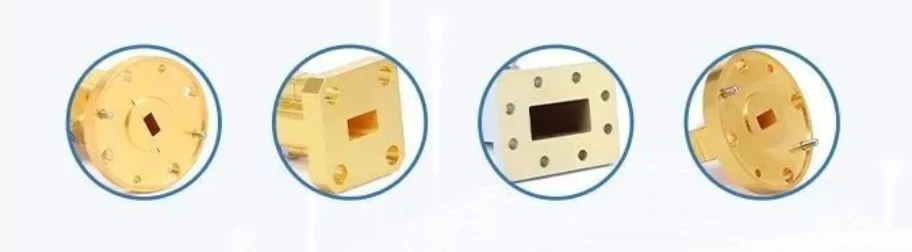
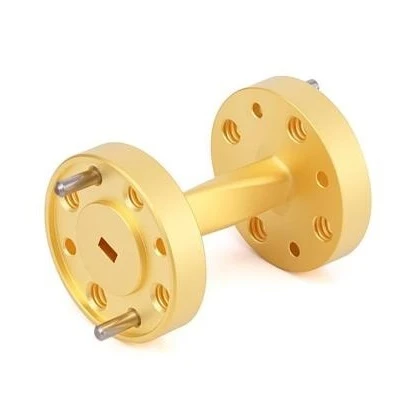
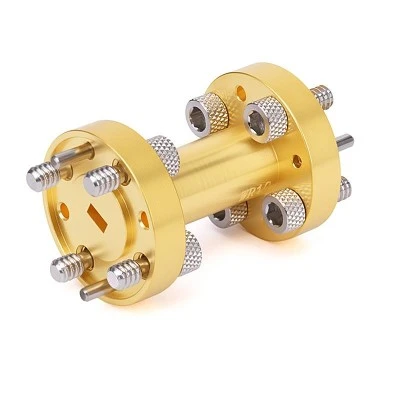
To understand the applications of waveguides and waveguide-to-coaxial adapters, it is first necessary to clarify the core positioning of the two components: A waveguide is a hollow metallic structure used for transmitting high-frequency electromagnetic waves, focusing on low transmission loss and high power capacity; a waveguide-to-coaxial adapter is a key transitional component that connects "waveguide systems" and "coaxial systems", solving the signal matching problem between these two types of transmission media. The two components usually work in conjunction and are widely used in high-frequency electronic systems. The following explanation will be developed from three aspects: basic characteristics, core application scenarios, and typical cases.
Application Fields: Core Application Scenarios of Waveguides and Waveguide-to-Coaxial Adapters
The applications of these two components always center on the requirements of "high frequency, high power, and low loss", covering multiple fields such as communications, radar, test and measurement, and energy. The specific scenarios are as follows:
1. Communications Field: Satellite Communications and Millimeter-Wave Base Stations
In communication systems, waveguides are responsible for transmitting high-frequency signals in core links, while waveguide-to-coaxial adapters connect the "waveguide transmission link" and the "coaxial-interface transceiver module", serving as a key bridge for signals to transition from "long-distance transmission" to "terminal processing".
Typical Scenario 1: Satellite Ground Stations
The signals transmitted between satellites and ground stations are microwaves/millimeter waves (e.g., C-band, Ku-band, Ka-band), which require a transmission link with low loss and high stability. Within a ground station, waveguides are used to connect the antenna feed and signal processing units (such as frequency converters). However, core devices like frequency converters and amplifiers typically have coaxial interfaces (e.g., SMA, N-type interfaces). Therefore, waveguide-to-coaxial adapters are needed to achieve a smooth transition and ensure distortion-free signal transmission.
Typical Scenario 2: 5G Millimeter-Wave Base Stations
5G millimeter-wave base stations (operating at frequencies such as 26GHz and 28GHz) require high-bandwidth and low-latency signal transmission. Due to their low-loss characteristic, waveguides are used in the "antenna-Radio Remote Unit (RRU)" link inside the base station. Since the output/input interfaces of RRUs are mostly coaxial, waveguide-to-coaxial adapters are necessary to complete signal matching while preventing external interference from affecting communication quality.
2. Radar Systems: Military Radar and Meteorological Radar
Radar systems need to transmit/receive high-power, high-frequency electromagnetic waves (e.g., X-band, Ku-band, W-band). Waveguides act as the core transmission medium for the radar's "transmitter-antenna" and "antenna-receiver" links, while waveguide-to-coaxial adapters solve the connection problem between the "power amplification module (with coaxial interface)" and the "waveguide transmission link".
Typical Scenario 1: Military Air Defense Radar
Military radars need to withstand transmit power above the kilowatt level. Coaxial cables are prone to failure due to inner conductor breakdown, so waveguides are used to transmit high-power signals. However, core radar components (such as solid-state power amplifiers and low-noise amplifiers) usually have coaxial interfaces. High-power waveguide-to-coaxial adapters (e.g., those with a "ridged waveguide + probe" structure) are required to achieve a transition, while ensuring impedance matching (VSWR < 1.2) to prevent device damage caused by power reflection.
Typical Scenario 2: Meteorological Doppler Radar
Meteorological radars need to receive weak echo signals, which imposes extremely high requirements on the low loss and low noise of the transmission link. Waveguides are used to connect the radar antenna and signal receiver to reduce signal attenuation. The front-end detector of the receiver (e.g., a Schottky diode detector) has a coaxial interface, so a low-noise waveguide-to-coaxial adapter is needed to realize signal coupling and ensure accurate detection of echo signals.
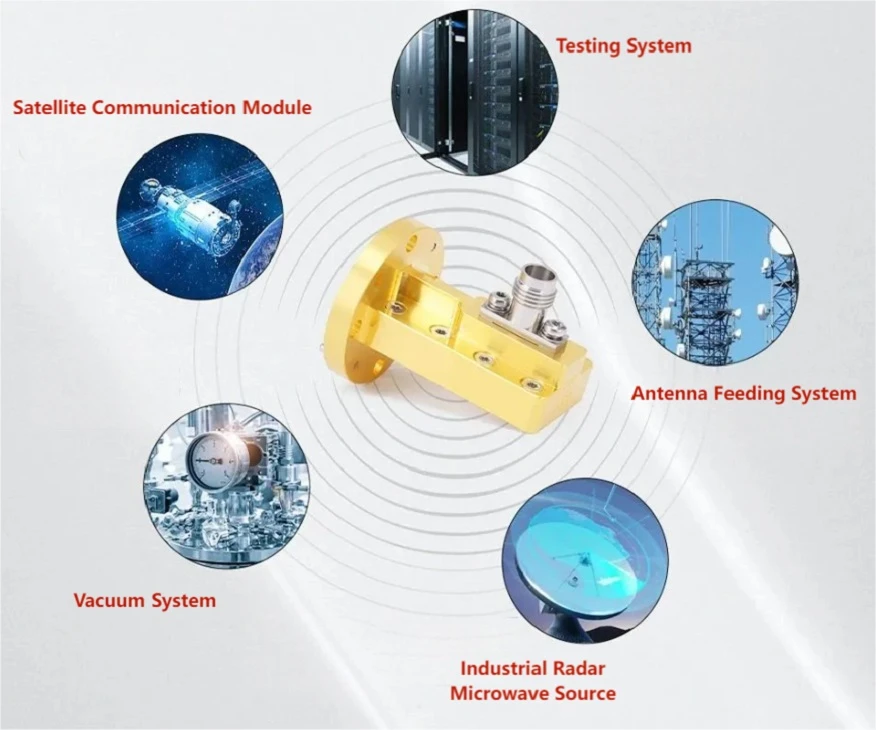
In the R&D and production of microwave/millimeter-wave devices, precision instruments (such as vector network analyzers and signal generators) are required to test their performance (e.g., insertion loss, voltage standing wave ratio, and isolation). Waveguide-to-coaxial adapters serve as a "translator" between "instruments with coaxial interfaces" and "tested devices with waveguide interfaces".
Typical Scenario: Waveguide Device Testing
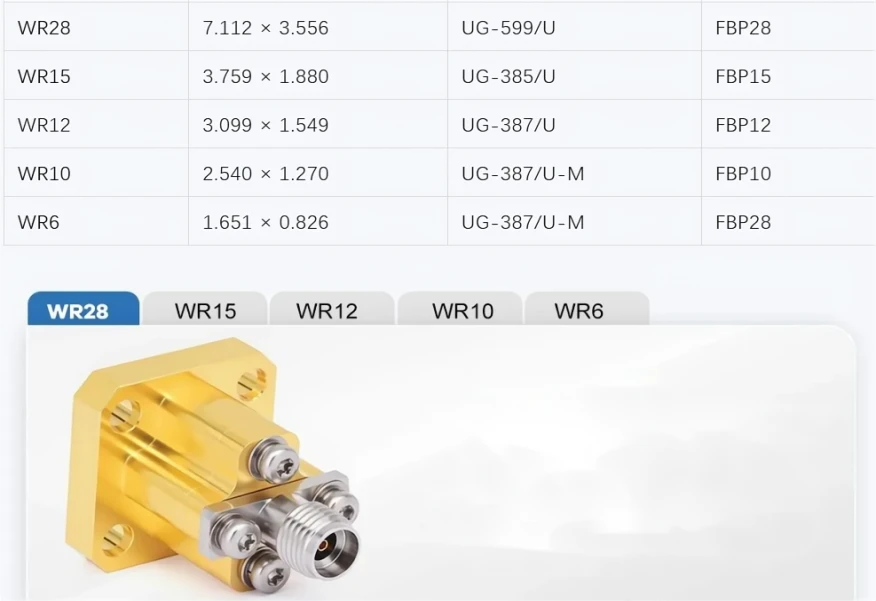
When testing the performance of a "rectangular waveguide filter", the output/input interfaces of testing instruments (such as a Vector Network Analyzer, VNA) are coaxial (e.g., 3.5mm, 2.4mm interfaces), while the filter has a waveguide interface (e.g., WR-42, corresponding to 18-26.5GHz). In this case, a "WR-42 to 3.5mm" waveguide-to-coaxial adapter is essential. It converts the coaxial signal from the instrument into a waveguide signal for input to the filter, and then converts the output waveguide signal of the filter back into a coaxial signal to transmit back to the instrument, thereby completing performance calibration.